



The team looks at the quality of the course as far as how it covers the topic, the video and audio quality, and the skill of the instructors.
Once the team rate a course, you'll be able to see the pros and cons as well as the pricing and any alternatives that they believe would be beneficial to students.
- Should You Do An Online Degree or A Certificate? - November 17, 2026
- Best Online College SNHU Alternatives - November 6, 2026
- Best LinkedIn Learning Courses (Lynda Courses) - March 31, 2020
People who are looking to upskill or change careers don’t struggle because there aren’t enough ways to learn something new. The real challenge is knowing which paths are actually worth it.
With demonstrated skills more important than ever in hiring, working adults need the right credentials. It’s easy to feel, however, that you have to put your life on hold or spend a fortune to get there. Thanks to some online degrees and certificate programs, it doesn’t have to be that way.
Today, we’ll talk through the benefits (and tradeoffs) of pursuing an online degree compared to a certificate program.
Degrees vs. Certificates At A Glance

| Online Degree | Certificate | |
| Time Commitment | 2-4 years | From 1-2 months to up to a year |
| Content Covered | Broad, comprehensive foundation in your field | Targeted, specific skills |
| Recognition | Widely recognized, required for many roles | Varied |
| Support Network | Access to alumni networks, university career support services | Limited, though some programs offer cohort-based learning |
| Cost | ~$7,300 – $50,000 | ~$300 – $9,500 |
Time Commitment
If you’re looking to immediately pick up a new skill or pivot very quickly into an entry-level role, a certificate can be a great option. Vendor certificates can take as little as a few weeks to a few months to complete: for example, AWS’ Cloud Practitioner certificate can be completed in just four weeks of study. Your completion time will vary based on how much time you can dedicate each week: for example, Google’s Career Certificates are estimated to take 3-6 months to complete if learners spend 10 hours a week on the program.
By contrast, a degree will be a much longer-term investment in your skillset. Online Bachelor’s degrees generally take anywhere from 2-4 years to complete. Some online universities, like Western Governors University (WGU), emphasize competency-based learning, so you can get through a degree more quickly if you have existing knowledge of your field or a particular course topic. Others, like University of the People, have generous transfer credit policies, which can make it much easier for students with previous college credit to complete their program. Students who have previously earned an Associate’s degree may have an especially efficient pathway through their degree, so long as the credits they earned are applicable at their new institution.
Content Covered and Applicability
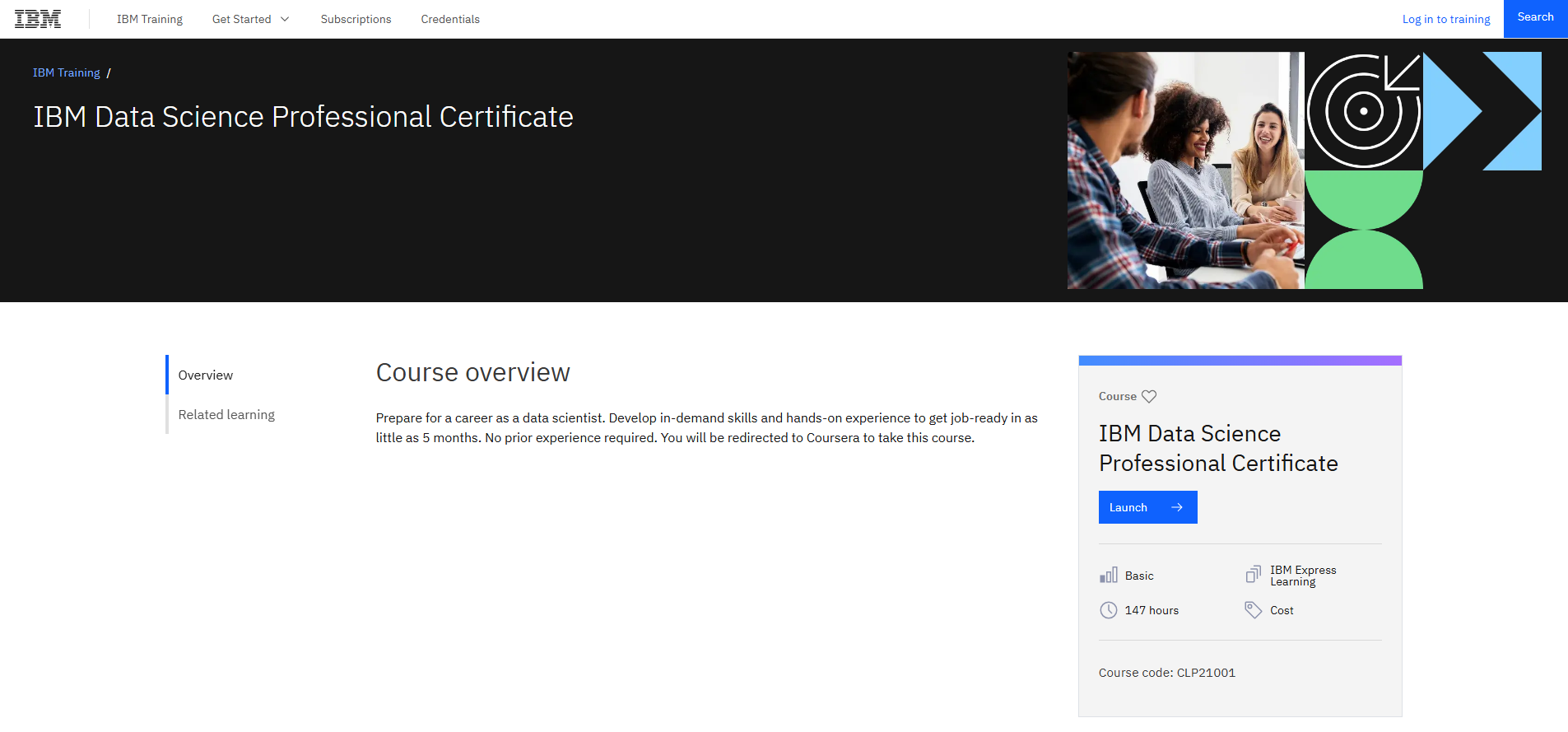
Certificates are typically designed to teach students a specific skill set that an employer may be looking for from an entry-level candidate. For example, IBM’s data science certificate has no prerequisites and teaches data science fundamentals to beginners. If job postings for your target roles tend to have one or two bullet points that you’re currently missing, a certificate can be an efficient way to address that.
Depth and breadth, though, are areas where full degrees have the undeniable edge over certificate programs. Online degrees will often cover many of the same job-specific skills (such as programming languages or software) that a certificate would, but also provide a broad, theoretical foundation in the field. Degrees teach students from all fields critical thinking, communication, and analytical skills that better equip workers to solve higher-level problems for the companies that later employ them. That’s why senior-level or management roles are more likely to require degrees than entry-level positions.
Another option is to pursue a certificate, then a degree. Some online universities will accept certificates (especially ones taken with them) for transfer credit into a degree program. If you’re dipping your toe into a new field, a certificate can be a great way to expose yourself to the field and build your skills before investing in a full degree.
Recognition
Generally speaking, degrees are much more highly recognized and valued by employers. A recent study by Harvard Business School’s Burning Glass Institute shows that fewer than one in 700 applicants get hired without a degree. Even when degree requirements were removed from job postings, applicants without a degree were only 3.5% more likely to get hired. Degrees remain one of the best ways to show your skill set and your ability to manage obligations and work well with others, which are especially important skills in a remote work environment.
While there may be some skepticism out there about online colleges, many of them boast strong career outcomes for graduates. University of the People, for example, reports that 85% of their alumni are employed after graduation, and 82% are in a job related to their degree program. Degrees from institutions that are regionally accredited tend to be the most valuable.
That’s not to say certificates don’t matter for job seekers. The Google Career Certificates, for example, have their own Employer Consortium of over 150 major employers who commit to considering those graduates for their entry-level roles. The consortium includes major brands like Deloitte, Verizon, Infosys, and Target.
Whether you pursue a certificate that comes from a university or a vendor, the brand of the provider may matter in how it’s recognized. edX, for example, offers certificates from institutions like Harvard, MIT, and UC Berkeley, which can certainly help a resume pop. Still, job seekers rarely get hired on certificates alone. It’s crucial to connect the rest of your professional background to the roles you’re pursuing and, in many fields, to develop a strong portfolio that fully represents your skills.
Support Network

For any online program, it benefits learners to take their own initiative and take advantage of any networking or peer learning opportunities available to them. How you find those, of course, varies by program.
Some certificate programs offer discussion forums, peer feedback opportunities, and private social media channels, but many of them lack the personalized mentorship that a bootcamp or a degree might offer. Certificate programs that run on cohort-based learning (where you study with the same learners for a defined period of time) tend to offer the most potential to connect with peers or mentors.
Online universities also vary in how many opportunities they offer to connect with others, but schools often have mentorship programs, career coaching services (like resume reviews and interview prep), as well as a dedicated database with jobs and internship listings for students.
To connect alumni networks, universities typically utilize large platforms like LinkedIn and Facebook groups. While you won’t know most of the people in those groups directly, studies show that fellow professionals are anywhere from two to five times more likely to respond to cold outreach if it comes from someone who attended their alma mater. Having a degree can help you secure referrals, interviews, or even job opportunities that may not be open to you otherwise.
Cost
While college degrees provide you with more skills and more in-depth preparation for your next role, the cost is usually much higher. Degrees, even fully online ones, typically cost tens of thousands of dollars. The one notable exception is University of the People, which is tuition-free and costs under $8,000 when accounting for application and assessment fees.
Some online universities charge by credit, and others by term. They also vary in terms of their calendar and whether or not they operate on a traditional semester-hour system. Here’s a breakdown of some popular online degree providers and their cost:
| Institution | Estimated Cost |
| SNHU | $42,000 per degree |
| University of Phoenix | $50,000 per degree |
| ASU Online | Up to $69,000 per degree |
| Purdue Global | $66,000 per degree |
| WGU | $3,500-$4,300 per term |
| University of the People | $5,600-$7,300 per degree |
By contrast, certificates tend to be much more affordable, especially if they’re from a vendor. Coursera, for example, offers access to all of its certificate programs for a subscription fee of just $49 per month. This can allow you to stack multiple credentials at once without paying more, and it also means that you’ll save money by completing the certificates faster. If you’re doing a standalone certification, those can cost anywhere from $100 (for AWS’ Certified Cloud Practitioner Program) to $9,500 (for a program like MIT xPro’s Executive Certificate in AI Strategy and Product Innovation). The more widely recognized a credential is, the more the provider can sometimes justify charging for it, though it’s always worth researching what graduates of any program have done afterwards!
Some universities offer both certificates and full degrees online. University of the People offers certificates in Game Design and Cybersecurity, which cost anywhere from $540-$2000 when you factor in application and assessment fees. Students frequently transfer their credits from those into degrees like their Bachelor of Computer Science, though the programs can be highly useful as standalone credentials too.
So, Should You Do an Online Degree or Certificate?

The most important thing to remember, no matter which type of credential you choose, is that it needs to make sense for your life. Adult learners don’t have the luxury of putting their life on hold to go to school, and that’s why online options (of all lengths, program models, and price points) have exploded in popularity. The higher education industry is starting to catch up with the needs of everyday people, and working adult learners now have more options than ever.
If you’re looking for the cheapest and fastest possible path into an entry-level role, a certificate or two will be your most efficient option. But if you’re looking for a broad, in-demand skill set that will qualify you for the highest-level roles, an online degree can be worth the investment.